
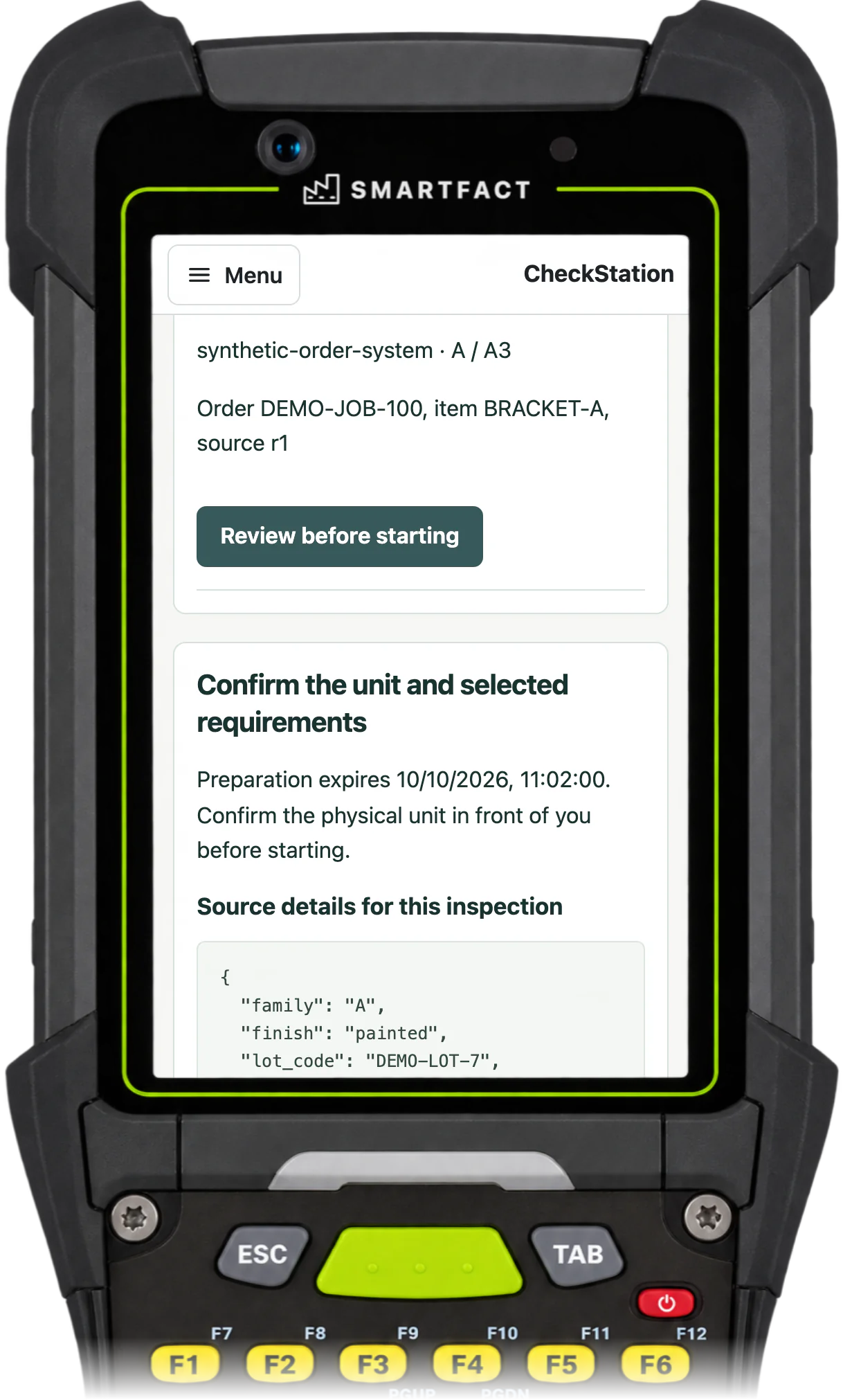
Which unit details select the checks?
Each unit carries its product family, drawing revision, supplier status, customer group and finish. The approved plan for the family and drawing revision supplies the base checks. Rules then use the other details: for example, a newly approved supplier adds a bracket width check and requires a supervisor to release the unit.
Rules add checks from the approved plan or require supervisor release. They never invent a check or a limit, and each check shows why it applies.
The unit's details come from CheckStation's own unit records, or from a CSV or JSON file that a supervisor previews and accepts.
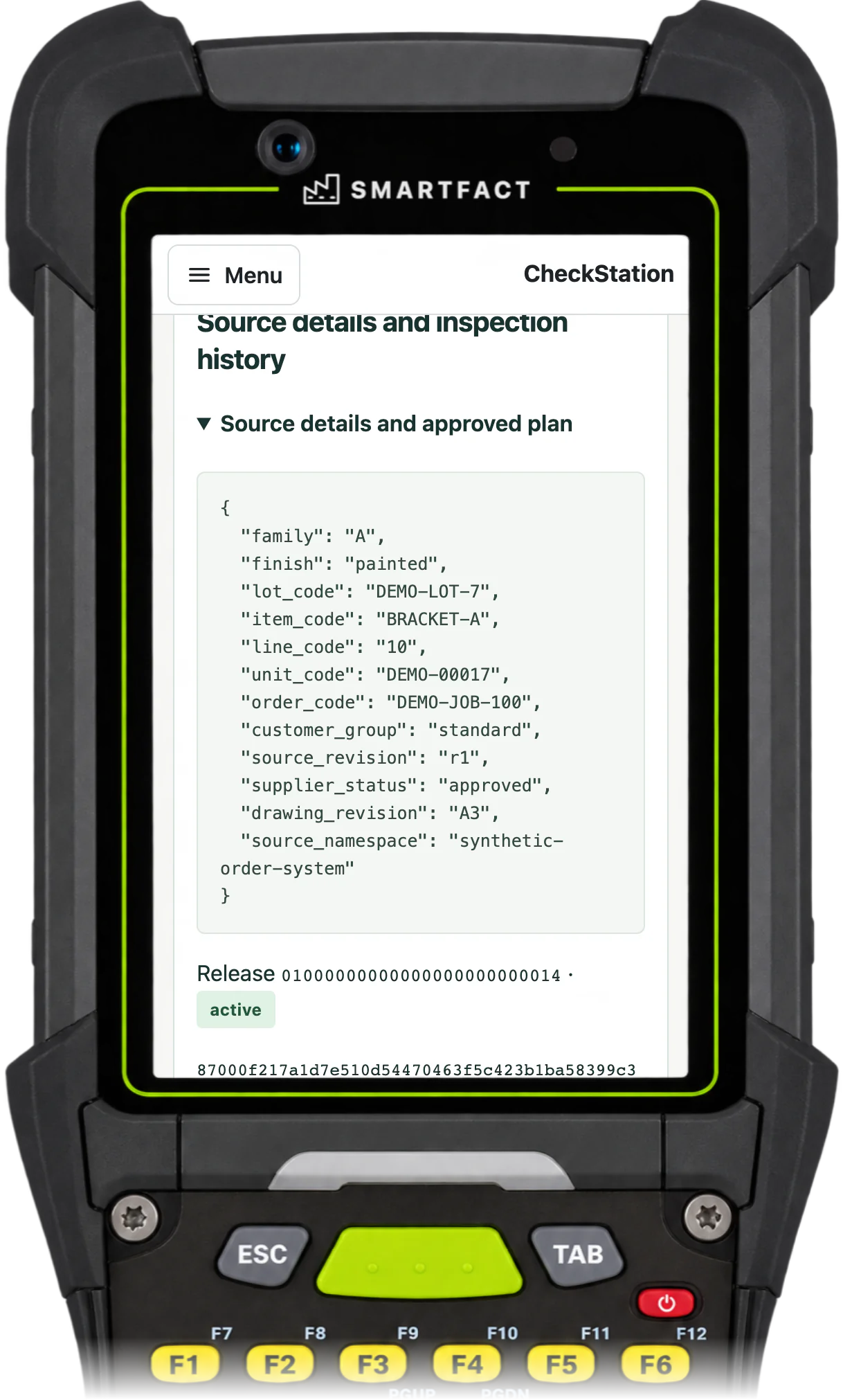
What if the unit is not known?
A scan that matches no registered unit stops there. The station shows that the unit was not found and no inspection starts: an unknown scan never creates a unit. A supervisor checks the identifier and registers the unit's approved details first.
Missing details stop the selection too. If a rule needs the supplier status and the unit has none, the checks are not selected, so a missing detail never quietly drops a check.
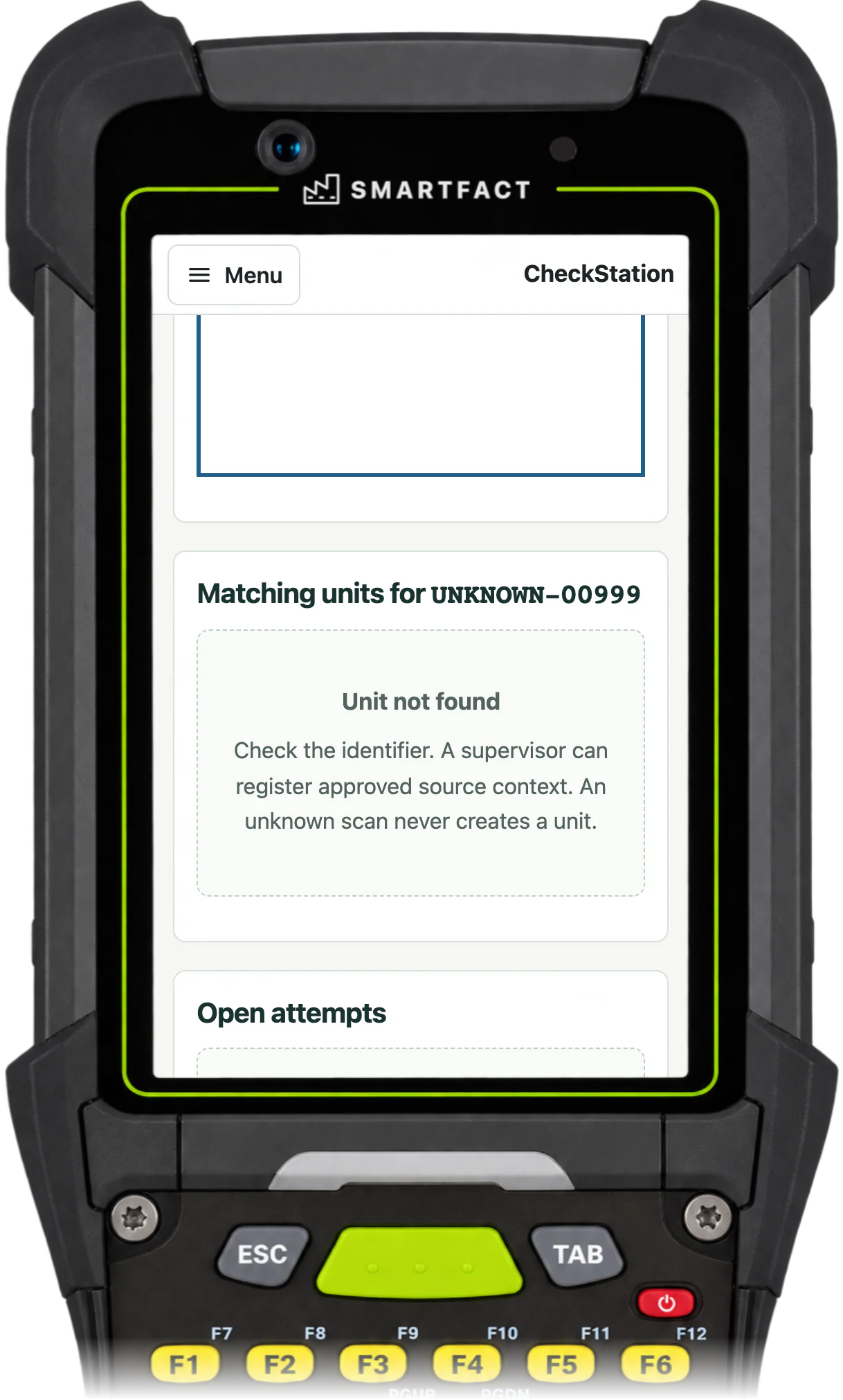
Who approves the rules and limits?
Your process owner supplies the methods and limits. An author prepares the plan and its rules in the structured plan editor, with example units and the checks each one should get. A different reviewer proves the plan against those examples and activates it; anyone who saved a draft of the plan cannot approve it.
Each inspection keeps the plan it started with, so a later change to the plan does not rewrite an earlier record.
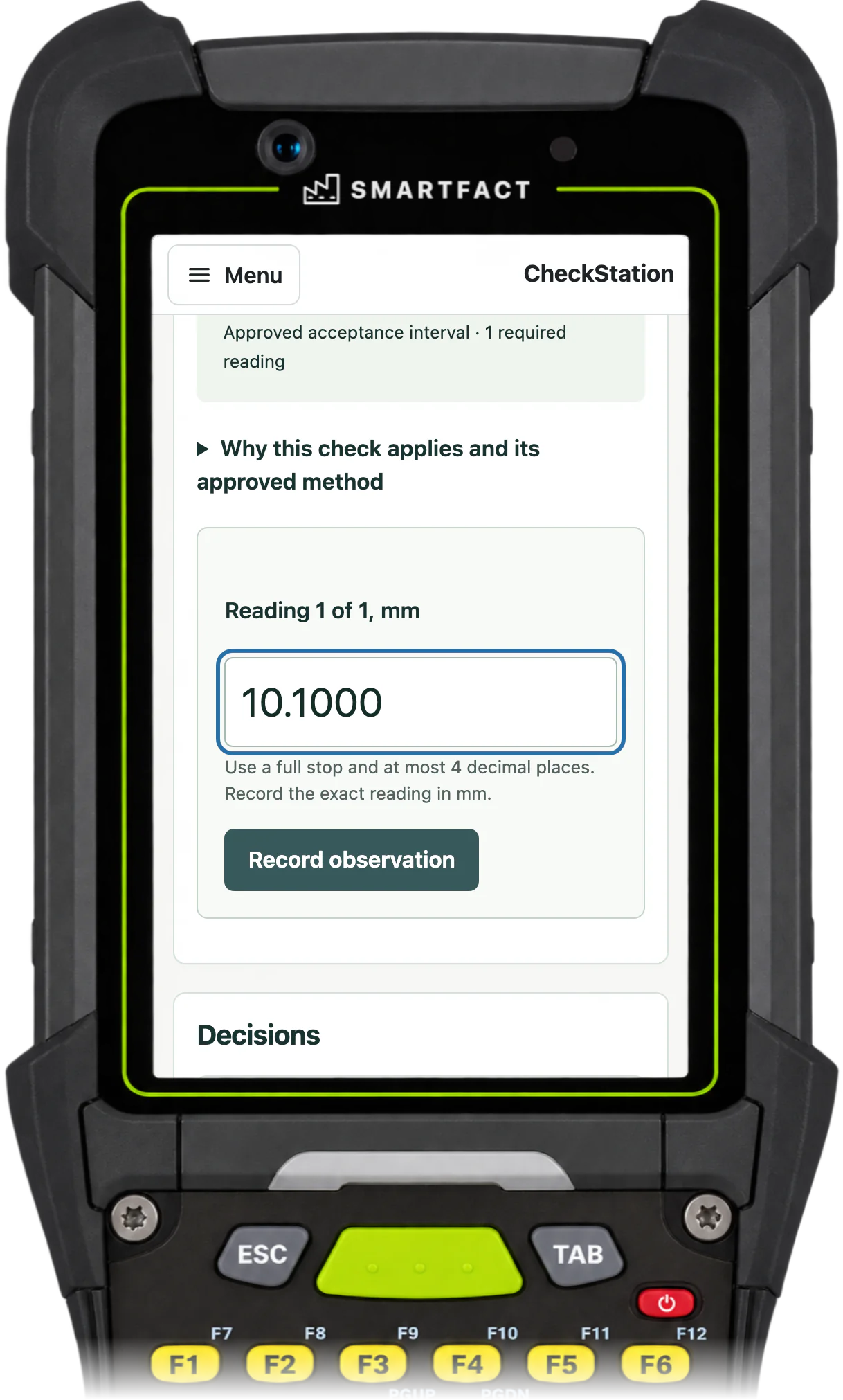
Exact values and explicit units
Each numerical check states its unit and precision, such as millimetres to four decimal places. The reading is entered in that unit and compared exactly with the approved limits, with no rounding first and no unit conversion, so a reading in another unit is refused.
What CheckStation does not do
- Rules that remove or replace a check. The base checks come from the approved plan, and rules add to them.
- An ERP connector. Unit details come from CheckStation's records or reviewed CSV or JSON files.
- Live instrument connections. Readings are entered by hand.
- AI decisions during inspection. No model is called to select checks or judge a reading.
Common questions
Do we need an ERP connector or another SmartFACT product?
No. CheckStation uses its own unit records, or unit details from a CSV or JSON file that a supervisor previews and accepts. It has no ERP connector, and connections to other SmartFACT products or live instruments are outside its scope.
Can a rule remove a check?
No. The base checks come from the approved plan for the product family and drawing revision. Rules can add approved checks or require supervisor release.
Early access starts with an agreed workflow. Supported scope and onboarding arrangements are confirmed with you.


