
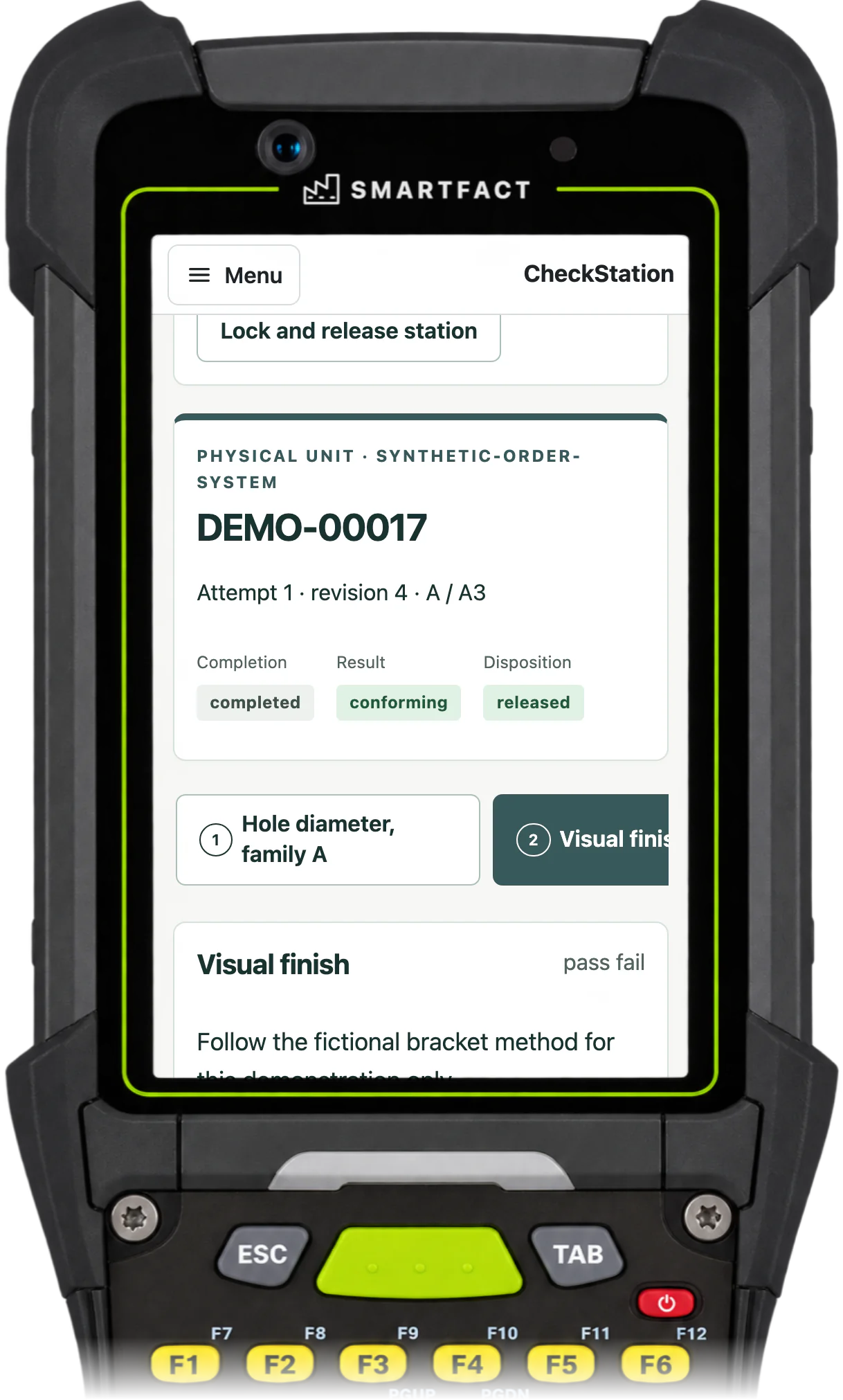
How are the checks chosen for each unit?
The inspector scans or enters the unit's identifier, and CheckStation looks up the registered unit and its order details. The approved plan for its product family and drawing revision supplies the base checks. Approved rules then add checks, or require a supervisor's release, according to the unit's supplier status, customer group or finish.
Before starting, the inspector reviews the unit, order, drawing and selected checks against the physical work and confirms the unit in front of them. Missing details or conflicting requirements stop the selection, so nothing is guessed.
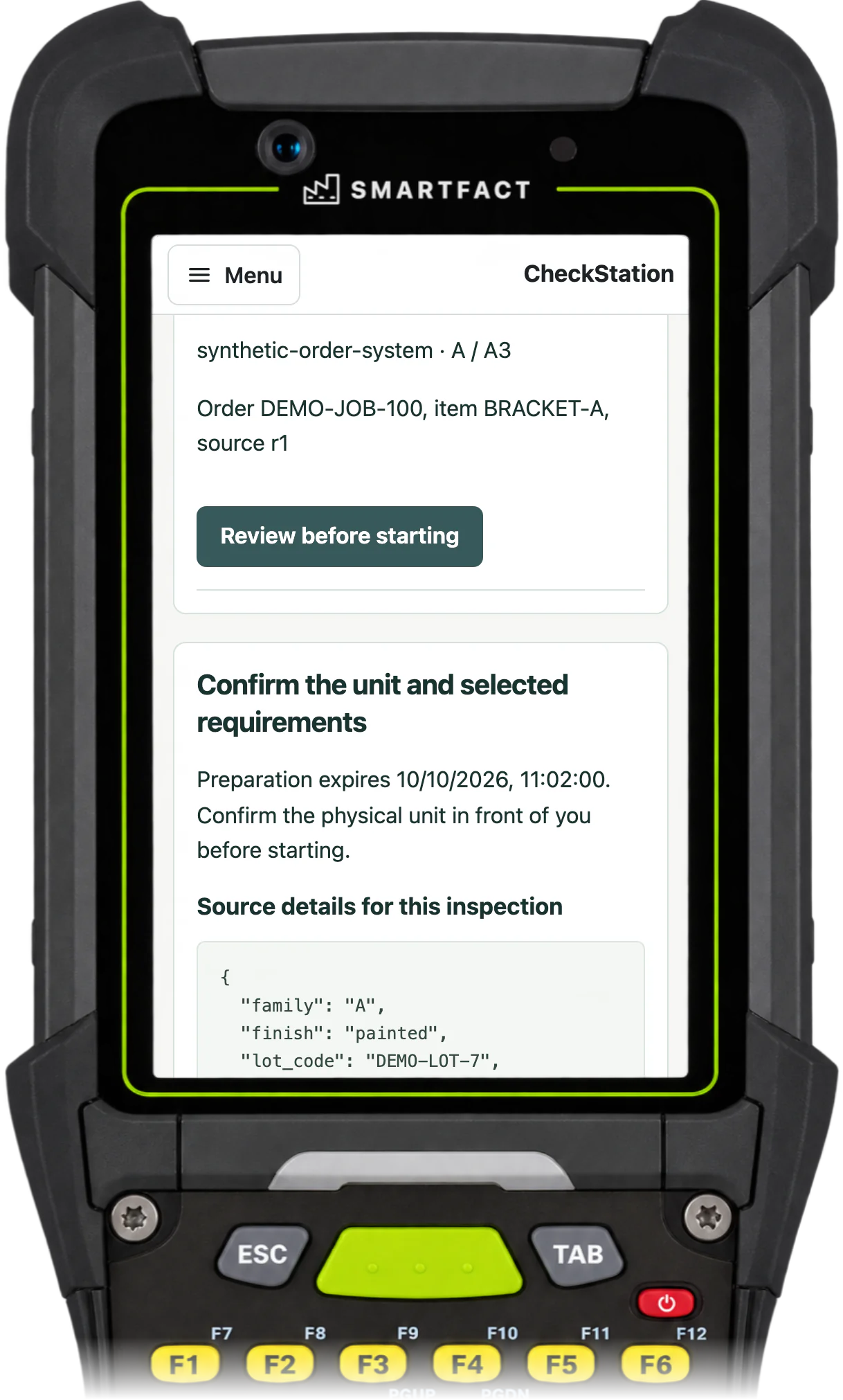
How is a reading recorded?
Each check shows the unit and precision it expects, and why it applies. The inspector enters the actual reading by hand, and CheckStation compares the exact decimal with the approved limits before any rounding for display. A reading of 10.1000 mm against an upper limit of 10.10 mm conforms; 10.1001 mm does not.
Visual checks are recorded as an observation against the approved method, such as pass or fail for a finish.
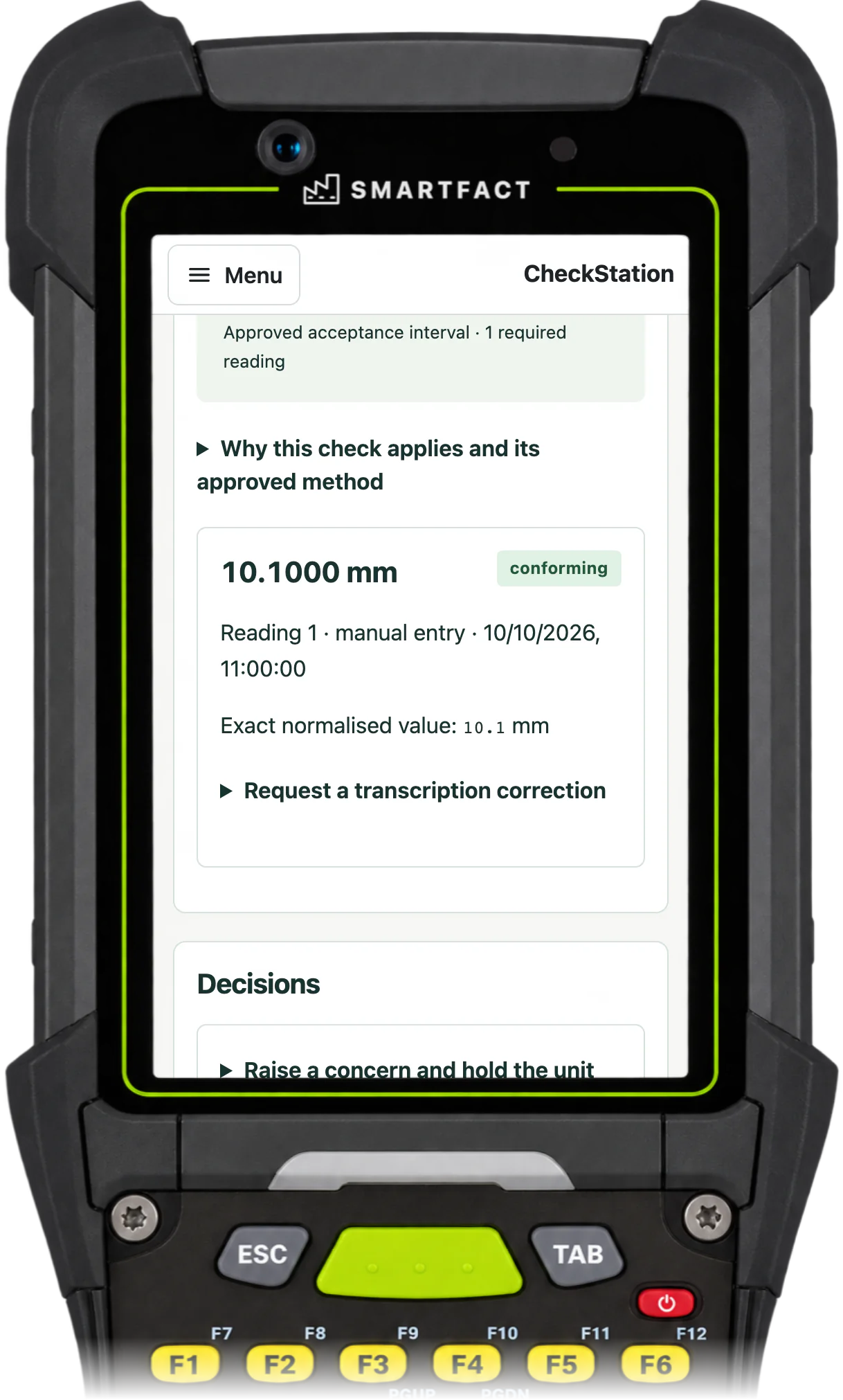
What if a reading is entered wrongly?
An entry that is not a valid reading is refused before anything is saved. A comma as the decimal separator, more decimal places than the check allows or a reading in another unit is refused, and the inspector enters the actual reading again.
A refused entry is not a failed reading. A valid reading outside its limit is recorded as a failure, and the unit is held.
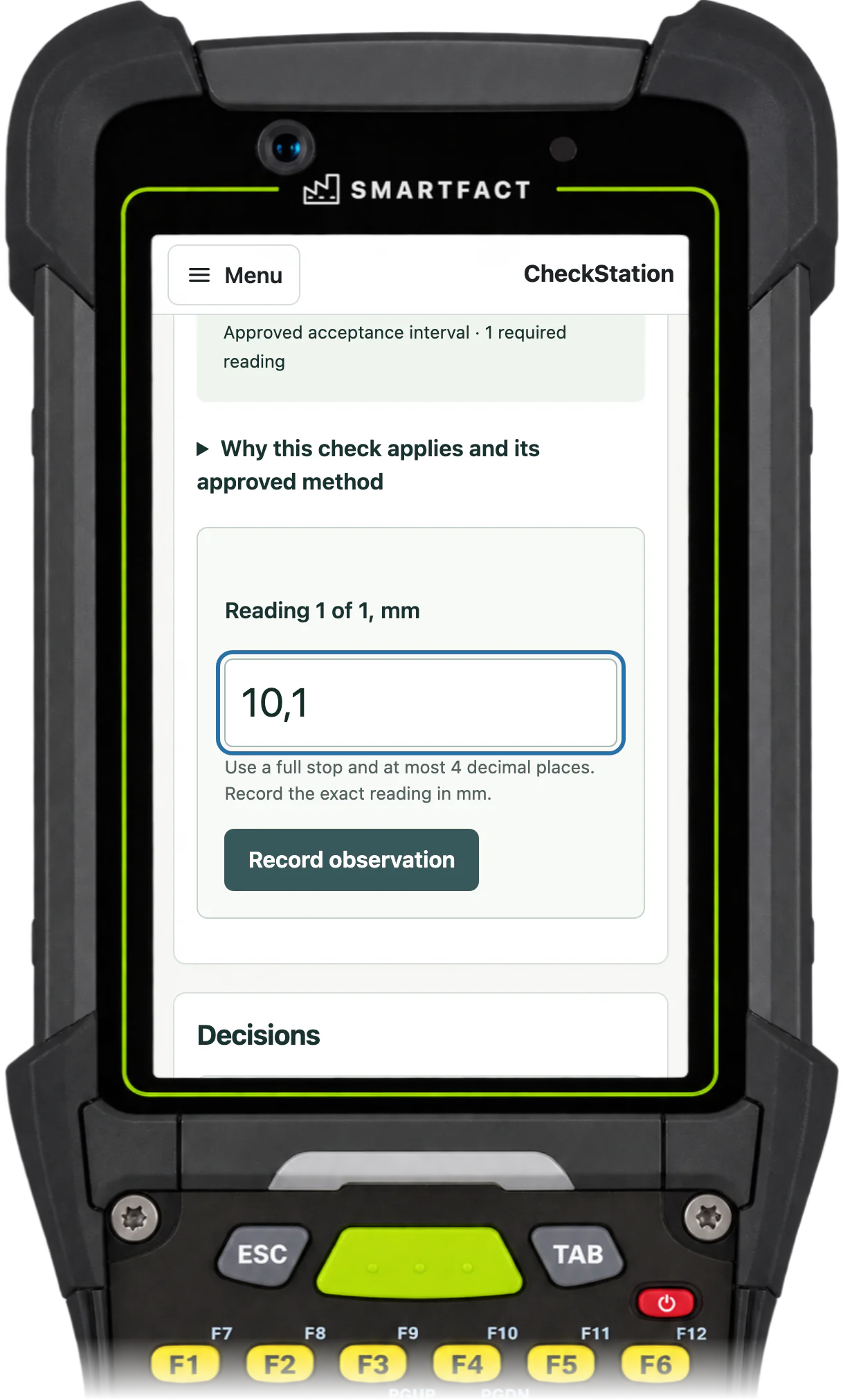
When is an inspection complete?
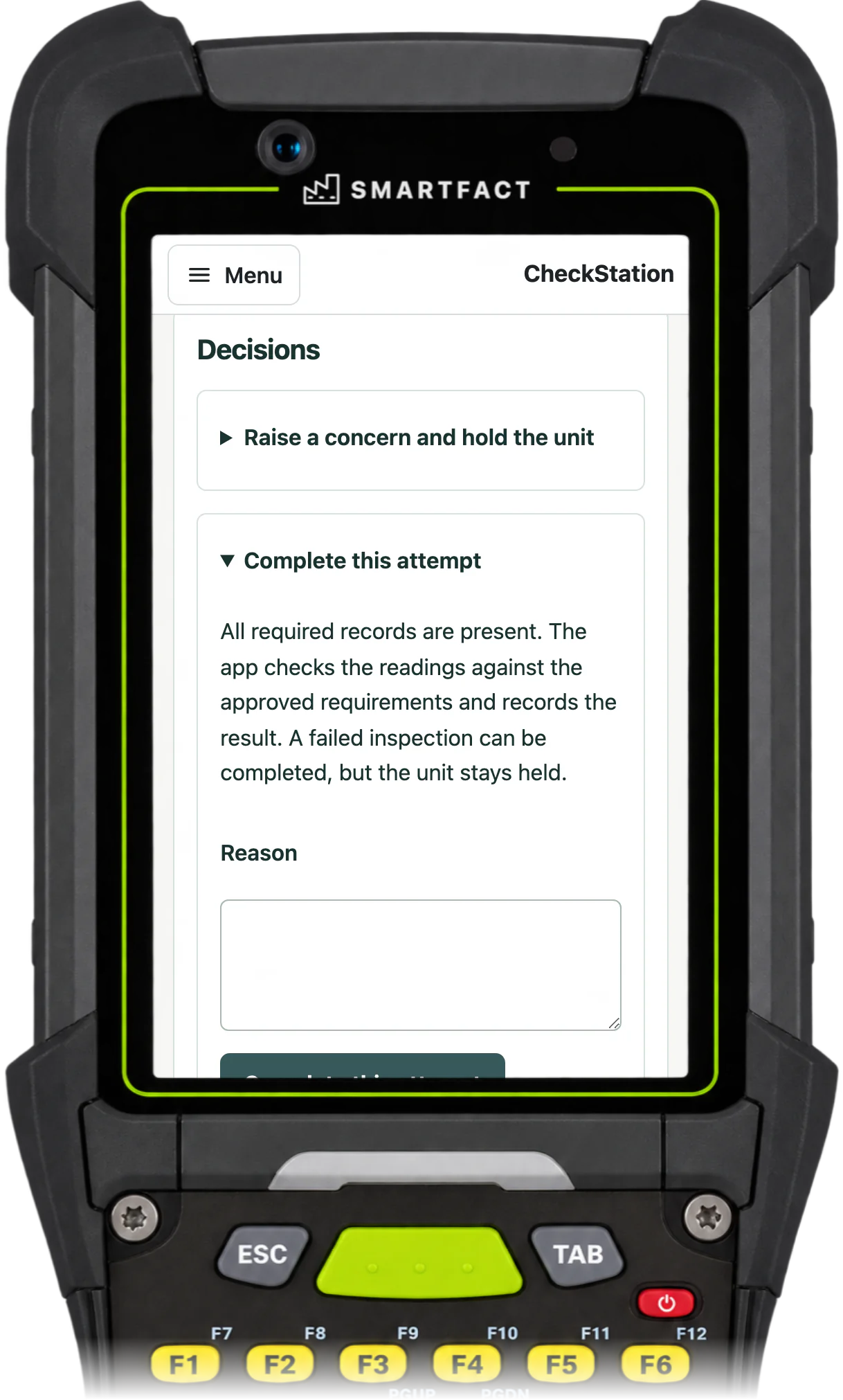
An inspection can be completed once every required observation is present. Completion, result and release are separate facts: a completed inspection can still be nonconforming, and a failed check keeps the unit held after completion.
When every result conforms, no hold remains and no rule requires a supervisor, completing the inspection releases the unit. Otherwise a supervisor releases it separately, with a reason.
What is kept in the record?
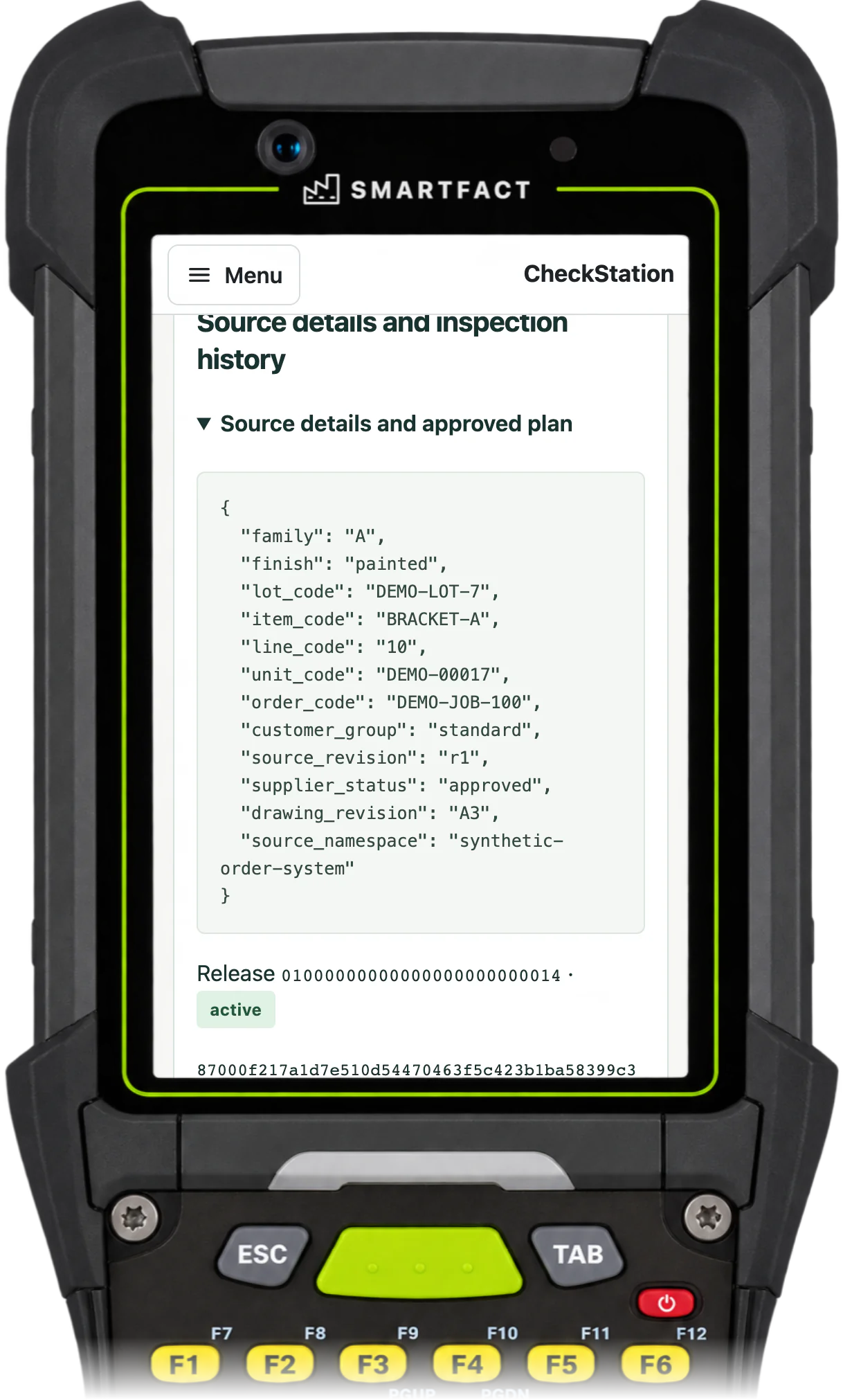
The record keeps the unit's source details, the approved plan it was inspected against and every observation with its exact value. Holds, corrections, retests, rejection and release are added as decisions with their reasons.
Corrections and retests add to the record. The original observation always stays visible.
What CheckStation does not do
- Sampling or lot release. Each inspection covers one identified unit, and a passing unit does not release its lot.
- Concessions.
- Live instrument connections. Readings are entered by hand in the unit shown.
- Offline inspection.
- Machine interlocks.
- Stock or despatch actions. A quality release records an authorisation on the unit; it does not move stock or authorise despatch.
Common questions
What is final inspection?
Final inspection is the last check of a finished product before it is released: the inspector confirms that it meets its approved requirements, such as dimensions and finish, and records the result.
Does AI decide whether a part passes?
No. The approved plan and an exact numerical comparison decide the result. Your team supplies the engineering limits and methods, and the inspector records each observation. No AI model is called during an inspection.
Does one passing unit release its lot?
No. Each inspection concerns one identified unit. Job and lot references are recorded as context, and CheckStation includes neither sampling nor lot acceptance.
Early access starts with an agreed workflow. Supported scope and onboarding arrangements are confirmed with you.


